Roof Leak or Condensation? How to Tell Before You Call
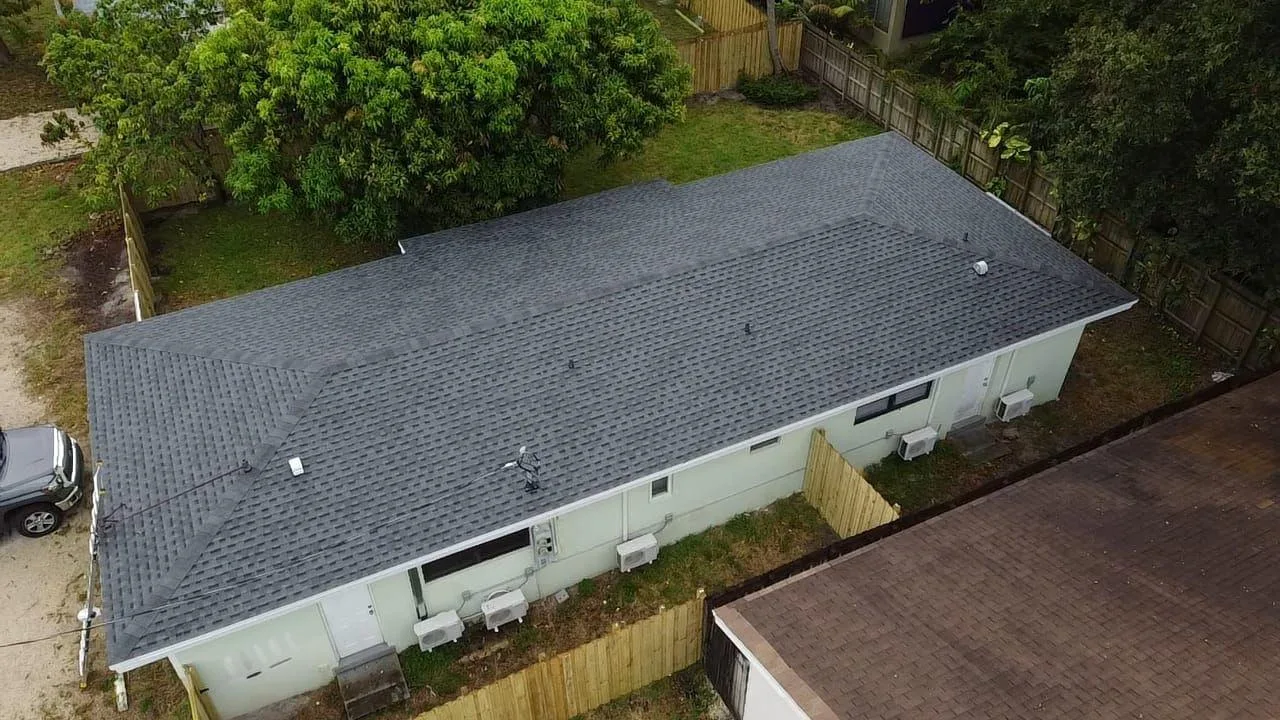
A ceiling stain in a South Florida home has more possible causes than anywhere else in the country, because our houses run air conditioning nine months a year through ductwork in a 130°F attic. We get called for "roof leaks" every week that turn out to be sweating ducts, a clogged condensate line, or a stucco crack. Here's how to narrow it down before you call anyone — and what to do when it really is the roof.
Start with timing
The single most useful clue is when the water shows up.
- After rain, and only after rain: roof, wall, or window. Keep going below.
- On hot, humid afternoons with no rain: almost certainly condensation or the AC system.
- Constantly, regardless of weather: plumbing. A supply line or drain above the ceiling.
- After heavy rain with wind from one direction: wind-driven rain through a wall, window, or a roof edge on that side.
Write down the date and the weather each time the stain grows. Two or three entries usually settle the question.
The AC suspects
Sweating ductwork. Cold supply ducts in a hot attic condense moisture on their outside surface like a glass of iced tea. Where the duct insulation is torn, compressed, or missing, water drips onto the drywall below. The stain is usually near a supply vent or along a duct run, and it appears on hot days.
Sweating supply vents. The metal boot behind a ceiling register condenses for the same reason, staining the ceiling in a ring around the vent.
Clogged condensate drain line. The air handler produces gallons of water a day; it leaves through a PVC drain line that clogs with algae. When it backs up, water overflows the drain pan and comes through the ceiling below the air handler — or runs along the attic floor and appears somewhere unexpected. This is the most common "roof leak" in South Florida that isn't. Look for a wet spot under or near the air handler, or a float switch that has shut the system off.
Frozen evaporator coil. A low-refrigerant or airflow problem freezes the coil; when it thaws, water pours out. Comes with weak cooling.
If any of these fit, you want an HVAC technician, not a roofer. Clearing a drain line is a $100–$300 service call.
The wall and window suspects
Stucco cracks, failed window sealant, and a missing weep screed let wind-driven rain into the wall cavity, where it runs down and shows up at the ceiling line or above a window — looking exactly like a roof leak. Clues: the stain is at the top of a wall or directly above a window, it appears only with wind from that side, and the roof above is fine.
When it is the roof
Roof leaks in South Florida come from a short list of places, and the field of the roof — the shingles or tiles themselves — is rarely one of them.
- Pipe boots. The rubber collar around plumbing vents cracks in our sun within 8–12 years. It's the number-one leak we repair. The stain is usually near a bathroom or kitchen.
- Flashing at walls, chimneys, and skylights. Lifted, rusted, or sealed with caulk instead of properly lapped metal.
- Valleys. Where two slopes meet, debris dams water and old underlayment fails.
- Penetrations added later. Satellite mounts, solar standoffs, new vents — anything screwed through the roof after it was built.
- Tile underlayment. On a tile roof, the tile sheds most of the water and the underlayment beneath does the waterproofing. At 20–25 years the underlayment fails while the tile looks perfect. The leak is often broad and slow.
- Storm damage. Lifted shingles, displaced tiles, broken ridge caps. Appears after a named storm or a strong squall line.
How to confirm it yourself
Look in the attic during rain. A flashlight, a bright day's worth of caution on the joists, and patience. Water travels along rafters and the underside of the deck, so the wet spot on the plywood is usually uphill of the ceiling stain — sometimes by several feet. Follow the trail up.
Check the roof from the ground for the storm signs described in our post-storm roof checklist: lifted shingles, slid tiles, debris, lifted flashing.
Match the stain to what's above it. A bathroom below means a vent pipe above. A stain at an exterior wall means the roof edge, gutter, or the wall itself. A stain in the middle of a room under a flat section means the membrane or a drain.
Don't hose-test a tile roof. Water testing can push water under tile that was never leaking and create a new problem. Leave that to a roofer.
What a professional does differently
A leak inspection is diagnostic work, not a glance at the roof:
- Drone photos of every slope and penetration, so the whole roof is documented without anyone stepping on brittle tile.
- Attic inspection to trace the water path to its entry point.
- Moisture readings on the drywall to map how far the water has spread.
- A written finding — this penetration, this flashing, this section of underlayment — with photos and a repair price.
We tell customers when it isn't the roof. Sending someone to an HVAC company instead of selling them a repair is the fastest way to earn a referral, and it happens every week.
What roof leak repairs cost
From our roof repair pricing for 2026 across Miami-Dade, Broward, and Palm Beach: a pipe boot or small flashing repair typically runs $700–$1,200 on shingle and $1,000–$2,500 on tile or metal; a moderate flashing or valley repair $1,000–$3,500; a repair that involves replacing rotted decking $1,500–$6,000 or more. A failed tile underlayment isn't a repair — it's a re-underlayment or a replacement, and we'll say so.
Frequently asked questions
The stain is dry now. Should I still do something?
Yes. A stain that appeared once will appear again, and the drywall and insulation above it may already be holding moisture. Find the cause while it's cheap.
Can a roof leak cause mold?
Yes, and quickly in our humidity. Wet insulation and drywall can support mold growth within days. That's the reason to act on a small stain rather than wait for a big one.
Is a small leak an insurance claim?
Usually not. Most repairs are well under a hurricane deductible, and a leak from age or a failed boot isn't a covered peril. If a storm caused it, our post on roof claim deadlines explains the timing.
How fast can someone look at it?
For an active leak we prioritize same-day or next-day inspections. If water is actively coming in, put a bucket down, move furniture, and photograph everything — then call.
SIA Roofing · Florida Certified Roofing Contractor CCC1334814 · (305) 333-2893. Free leak inspections across Miami-Dade, Broward, and Palm Beach — including the ones that turn out to be the AC.
Ready to Protect Your Home?
Schedule a free inspection with South Florida's most trusted roofing experts.