TPO vs. Modified Bitumen for Florida Flat Roofs
Flat and low-slope roofs are everywhere in South Florida — mid-century Miami homes, condo buildings, strip retail, warehouses, and the flat section over the garage on a pitched house. When one needs replacing, the choice almost always comes down to two systems: TPO and modified bitumen. Both are proven in the High-Velocity Hurricane Zone. They behave differently in our heat, they're repaired differently, and they suit different buildings. Here's the comparison we give our own customers.
What each system is
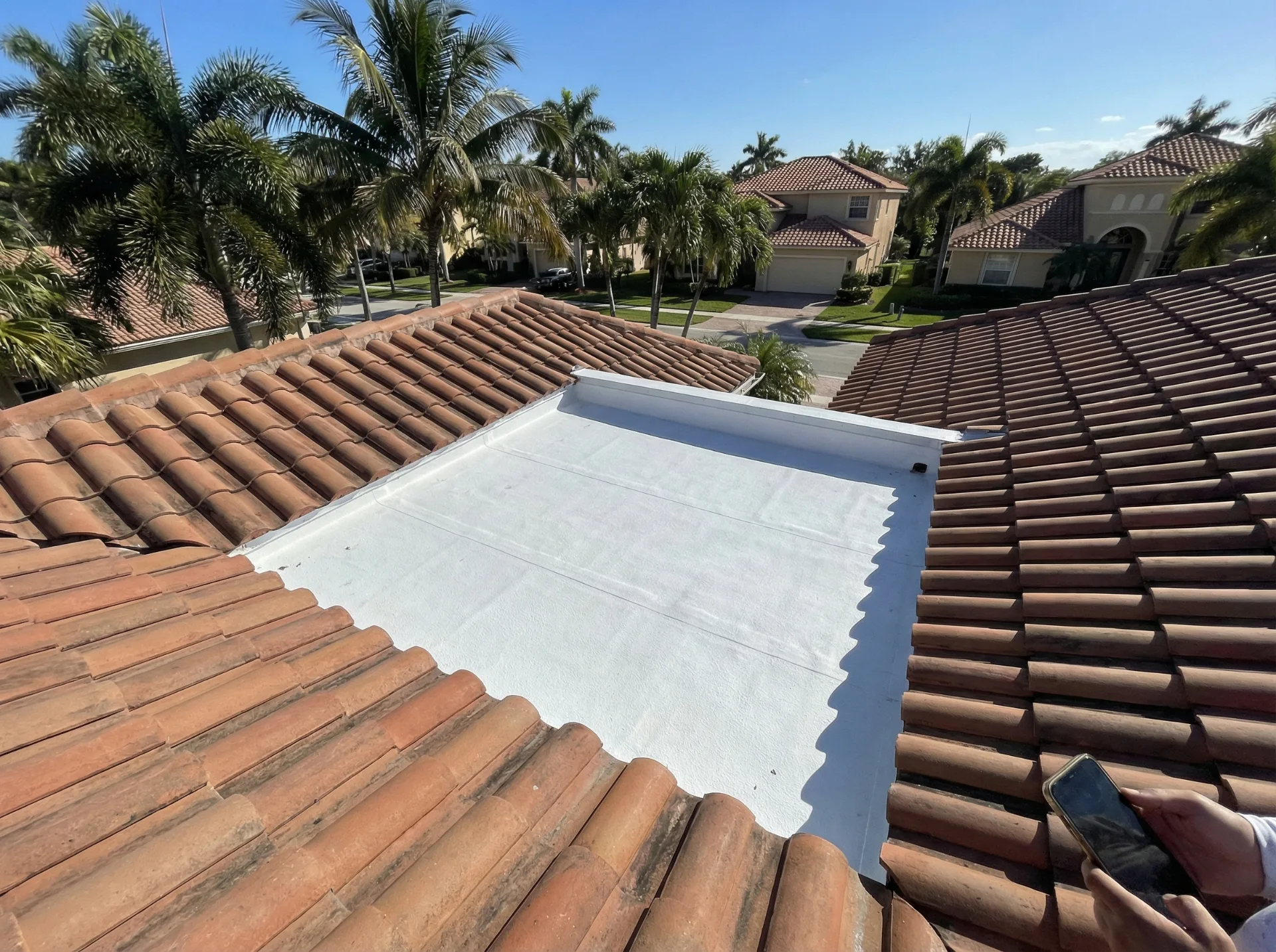
TPO (thermoplastic polyolefin) is a single-ply membrane, usually white, rolled out in wide sheets and joined with heat-welded seams. It's attached either mechanically (screws and plates through the membrane into the deck, covered by the next sheet) or fully adhered with adhesive. Thickness matters: 45 mil is the minimum, 60 mil is the standard we recommend, 80 mil is the premium option.
Modified bitumen (mod-bit) is an asphalt-based system, typically two plies: a base sheet and a granulated cap sheet. In South Florida it's usually installed as a self-adhered system — peel-and-stick — rather than torch-applied, which eliminates open flame on the roof. The cap sheet is available in white or reflective granules as well as the traditional dark finish.
Both require a Miami-Dade NOA in the HVHZ, and both are installed over a properly sloped deck (a minimum of a quarter inch per foot) with tapered insulation where needed to move water to the drains.
Cost
Installed, in 2026, across Miami-Dade, Broward, and Palm Beach:
- TPO, 60 mil, mechanically attached: $7–$10 per square foot.
- TPO, 60 mil, fully adhered: $8–$11 per square foot.
- Modified bitumen, two-ply self-adhered: $6–$9 per square foot.
Those figures include tear-off, a recovery board or insulation as required, flashing, and drains, for a typical residential or small commercial roof. Large commercial roofs price lower per foot; small residential sections with lots of penetrations price higher. Tapered insulation to fix ponding is extra and often the most valuable line on the proposal.
Life expectancy in South Florida
Our sun is the enemy of every flat roof. Realistic service life here, with basic maintenance:
- TPO: 15–25 years. The white surface reflects heat, which slows aging and lowers cooling costs. Early-generation TPO had formulation problems; current products from the major manufacturers have a solid track record, but stick with the established brands.
- Modified bitumen: 15–20 years, longer with a reflective coating applied mid-life. The granulated cap protects the asphalt from UV; when granules wear off, the aging accelerates.
Either system can be extended by a silicone or acrylic coating at year 12–15, which is a fraction of replacement cost and adds 10 years or so if the membrane underneath is sound.
Where each one wins
TPO wins on:
- Heat. A white TPO roof runs dramatically cooler than a dark surface, which matters for the rooms below and the AC bill.
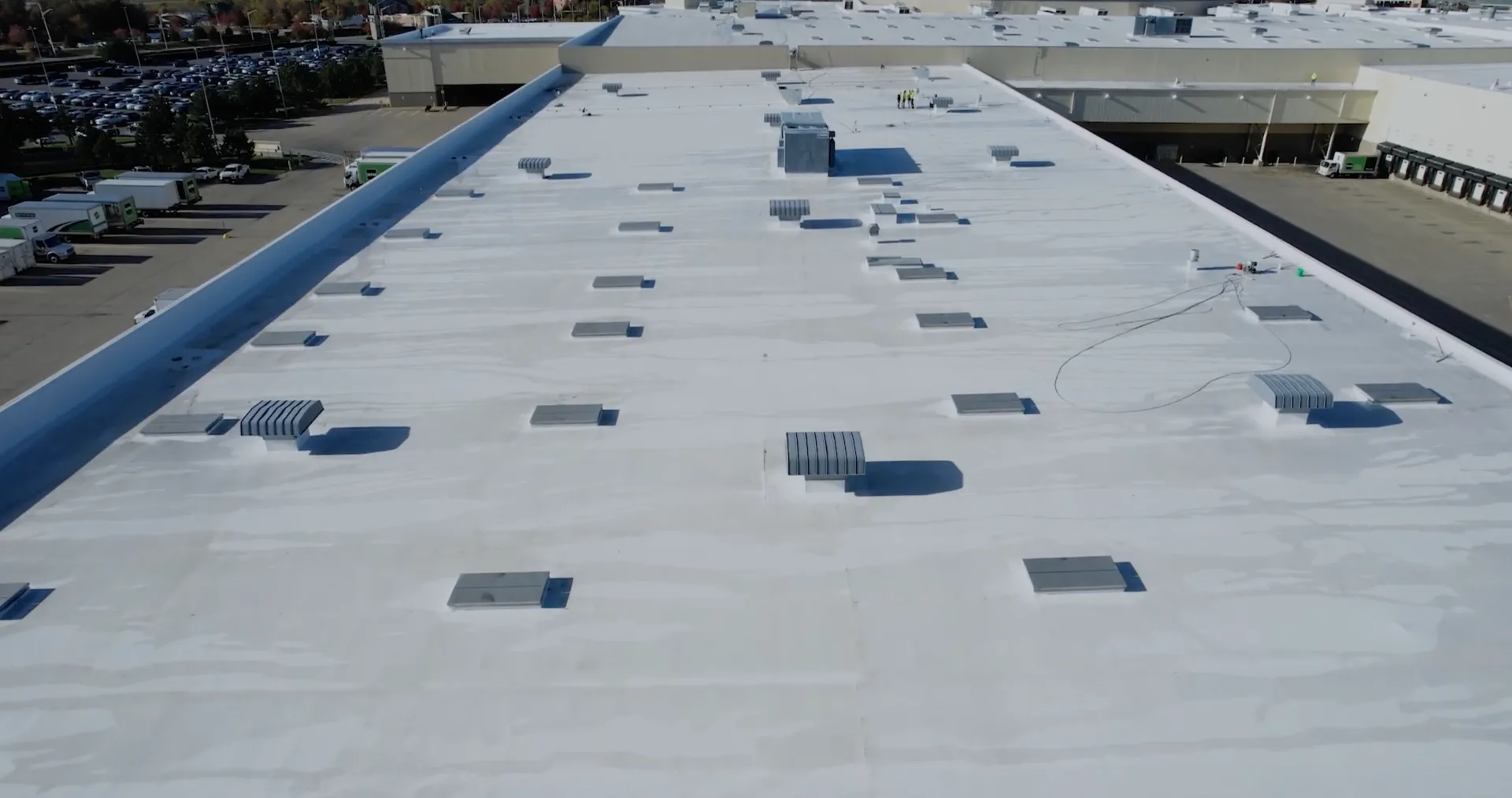
- Large, open roofs. Wide sheets mean fewer seams per square foot, and heat-welded seams, done right, are the strongest joint in roofing.
- Chemical exposure. Restaurant exhaust and rooftop equipment leaks affect asphalt; TPO shrugs them off.
Modified bitumen wins on:
- Foot traffic and abuse. Two thick plies with a granulated surface tolerate technicians, equipment, and dropped tools better than a single membrane.
- Complex roofs with many penetrations. Flashing a dozen vents, curbs, and pipes is more forgiving in mod-bit.
- Repairs. Patching mod-bit is simple and can be done by any competent roofer. TPO repairs need a welder and clean, compatible membrane; an old, dirty TPO surface can be hard to weld to.
- Small residential sections. For the flat area over a garage or a porch on a pitched house, mod-bit is often the practical, economical choice.
Seams: the thing that actually fails
Flat roofs don't usually fail in the field of the membrane. They fail at seams, flashing, and drains. TPO's welded seams are excellent when the installer's welder is calibrated and the membrane is clean — and poor when it isn't; a cold weld looks fine and separates in year three. Mod-bit's self-adhered laps depend on surface temperature and roller pressure during installation, and on the cap sheet's granules being properly embedded at the laps.
The practical point: with either system, the installer matters more than the brand. Ask for the crew's experience with the specific system, and ask to see the seam work on a recent job.
Wind
Both systems carry HVHZ approvals with specified attachment for the design wind pressures of your building. Mechanically attached TPO relies on the fastener pattern, which is denser at the perimeter and corners where uplift is highest; fully adhered TPO and self-adhered mod-bit rely on the adhesive bond to a sound substrate. The failure we see after storms is almost always an edge: a lifted metal edge flashing or a corner where the attachment was under-specified. The NOA tells the installer exactly what the perimeter and corner zones need; a good proposal references it.
Which one for your building
- Single-family home, flat section on a pitched roof: modified bitumen, self-adhered, with a reflective cap. Practical, repairable, no flame.
- Mid-century Miami home with an entirely flat roof: either. TPO if the rooms below run hot; mod-bit if the roof has many penetrations or sees foot traffic.
- Condo or apartment building: TPO on large, open sections; mod-bit around heavy equipment areas is a common hybrid. Association boards also weigh the manufacturer's system warranty, which both offer at 15–20 years when installed by a certified contractor. Our commercial roofing page covers how we work with association boards.
- Retail, office, warehouse: TPO is the default for large commercial roofs in South Florida for cost, reflectivity, and seam strength. Our commercial roofing team installs both.
Frequently asked questions
Can TPO be installed over my existing flat roof?
Sometimes, over a single existing layer in sound condition with a separation board, if the code and the NOA allow it for your deck. Wet insulation underneath disqualifies it — always. A moisture survey before deciding is worth the small cost.
Does a white roof really lower cooling costs?
Yes, measurably, on flat roofs with living or working space directly below. A reflective surface can lower the roof surface temperature by 50°F or more on a summer afternoon compared to a dark one.
How do I maintain a flat roof?
Keep drains and scuppers clear, especially before and after storm season; check seams and flashing annually; keep foot traffic on walkway pads; and recoat at year 12–15. Our flat roofing page has a maintenance checklist.
Is PVC an option?
Yes. PVC is a single-ply relative of TPO with excellent chemical resistance and a long track record, at a higher price. It's the right choice for restaurant roofs and some industrial buildings; for most homes and offices, TPO or mod-bit is the better value.
Get a measured comparison
Every flat-roof proposal we write shows both systems priced for your actual roof, with the NOA numbers and the attachment specified for your building's wind zone. Book a free inspection for any home, condo, or commercial building in Miami-Dade, Broward, or Palm Beach.
SIA Roofing · Florida Certified Roofing Contractor CCC1334814 · (305) 333-2893.
Ready to Protect Your Home?
Schedule a free inspection with South Florida's most trusted roofing experts.