Coral Gables Trees and Your Roof: Trimming Rules
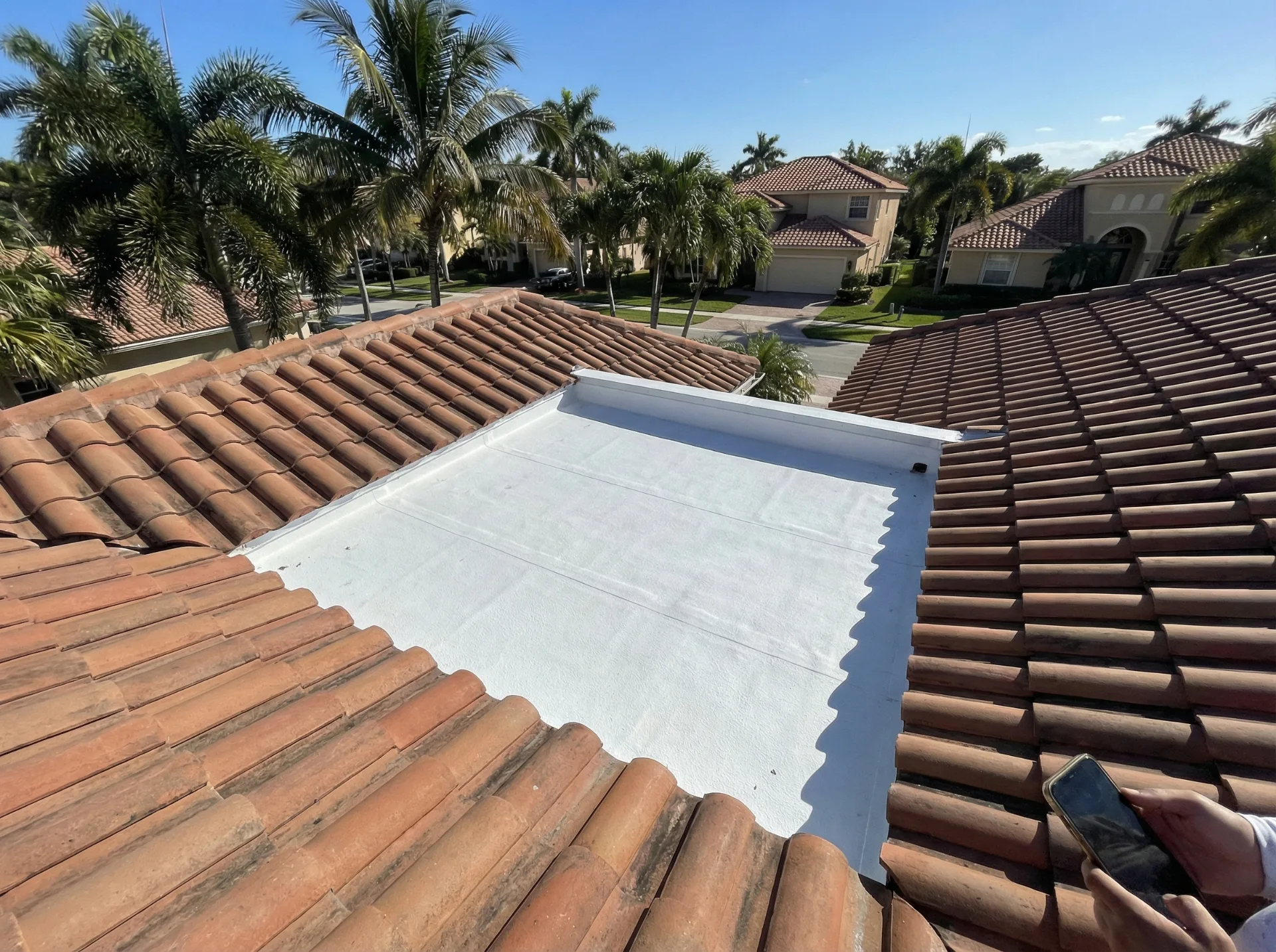
Coral Gables calls itself the City Beautiful, and a big part of that is its tree canopy: live oaks, banyans, mahoganies, and royal palms over nearly every street. For a roof, those same trees are the biggest long-term source of damage after the sun. Here's how trees wear out a roof, what Coral Gables lets you trim on your own property, and how to plan tree work and roof work together.
How trees damage a roof
Abrasion. Branches that touch the roof move every time the wind does. On tile, that wears the surface and loosens tiles at the edges; on shingles, it grinds off granules until the mat is exposed.
Debris and moisture. Leaves, seed pods, and twigs collect in valleys, behind chimneys, and in gutters. They hold water against the roof for days after every rain. That's where underlayment fails first and where flashing rusts.
Shade and growth. A roof that never dries grows algae, moss, and lichen. On clay tile it works into the surface and the joints; on shingles, the black streaks are algae eating the limestone filler.
Impact. In a storm, a large limb is the most common cause of catastrophic roof damage we see in Coral Gables. Even a mid-size branch can crack a run of tiles and puncture the underlayment beneath.
Access for animals. Branches touching the roof are highways for rats, squirrels, and raccoons looking for a gap at the fascia or a vent.
What Coral Gables allows you to trim
According to the city's own tree pruning guidance, homeowners don't need a permit to prune trees on their own private property, unless the work will:
- remove more than 25% of the tree's canopy, or
- cut branches larger than 10 inches in diameter.
The city also recommends that branches over 4 inches in diameter be cut by, or under the supervision of, someone trained in ANSI pruning standards, such as a certified arborist. Removing a tree requires a city permit. Trees in the swale between the sidewalk and the street are generally the city's to maintain; ask the city before touching them.
The Florida law on dangerous trees
State law adds an exception that matters most after storms. Under Florida Statute § 163.045, a city can't require a permit, fee, or replacement planting to prune, trim, or remove a tree on residential property if the owner has documentation from an ISA-certified arborist or a Florida-licensed landscape architect that the tree presents an unacceptable risk to people or property. Since 2022, that documentation has to follow a formal tree-risk assessment.
In practice: if a tree over your roof is a genuine hazard, a written assessment from a certified arborist is what lets you deal with it without waiting on a city permit. If it's simply in the way, the city's normal rules apply.
A practical clearance plan
- Keep branches off the roof entirely. Arborists commonly recommend keeping limbs several feet clear of the roof surface so they can't touch it in a strong wind.
- Prune before storm season. Tree crews book up fast from May on. Schedule pruning in the spring, before hurricane season starts June 1.
- Don't over-prune palms. The "hurricane cut" that strips a palm to a few fronds weakens the tree. Leave the healthy green fronds.
- Clean the valleys and gutters after every heavy drop. That includes live oak leaf drop in spring and seed pods in summer.
- Look at the roof after every storm. Our post-storm roof checklist covers what to check from the ground and the attic.
When tree work and roof work overlap
Before a re-roof: trim first. A new roof installed under branches that will scrape it is a new roof that starts aging on day one, and crews need clear access to stage tile and materials safely.
During a re-roof: we protect landscaping, but large trees close to the house sometimes mean tile has to be loaded by hand rather than by boom truck. That's a scheduling detail to know up front.
After storm damage: remove the limb before the roof is repaired, and document everything first. Photograph the tree, the limb, and the roof before anything is moved. If a tree falls on the roof, it's usually covered as storm or falling-object damage, and tree removal coverage on homeowners policies is typically limited. Our post on Florida roof claim deadlines explains the timing.
Roof cleaning under a canopy
Shaded roofs in Coral Gables need cleaning more often than sunny ones. The right method is a soft wash, a low-pressure treatment that kills algae and lichen without damaging the surface. Never pressure-wash a tile or shingle roof. It breaks tile seals and strips shingle granules, and it can void manufacturer warranties.
Frequently asked questions
Do I need a permit to trim a tree over my roof?
Not for routine pruning of your own trees on private property, as long as you remove no more than 25% of the canopy and no branches over 10 inches in diameter. Larger work or removal needs a permit, unless you have a certified arborist's risk documentation under state law.
My neighbor's tree hangs over my roof. Can I cut it?
Generally, you can trim branches that extend over your property line, back to the line, without harming the tree. Talk to your neighbor first; it avoids most disputes.
How often should a shaded roof be inspected?
At least once a year, and after any named storm. Under heavy canopy, check valleys and gutters every few months.
Can tree roots damage my roof?
Not the roof itself, but roots can affect drainage and foundations. The roof problems come from the branches.
Get the roof checked under the canopy
Our Coral Gables office inspects roofs across the city, South Miami, Pinecrest, and Coconut Grove by drone, so nobody has to walk on brittle tile, and we'll tell you which branches are doing damage before they cause a leak. See our Coral Gables roofing page, our roof repair work, or book a free drone inspection.
SIA Roofing · Coral Gables office · 7811 Erwin Rd, Coral Gables, FL 33143 · (305) 481-9353 · Florida Certified Roofing Contractor CCC1334814. Tree rules summarized from the City of Coral Gables' pruning guidance and Florida Statute § 163.045; confirm specifics with the city before major tree work.
Ready to Protect Your Home?
Schedule a free inspection with South Florida's most trusted roofing experts.