Matching Barrel Tile on Older Coral Gables Homes
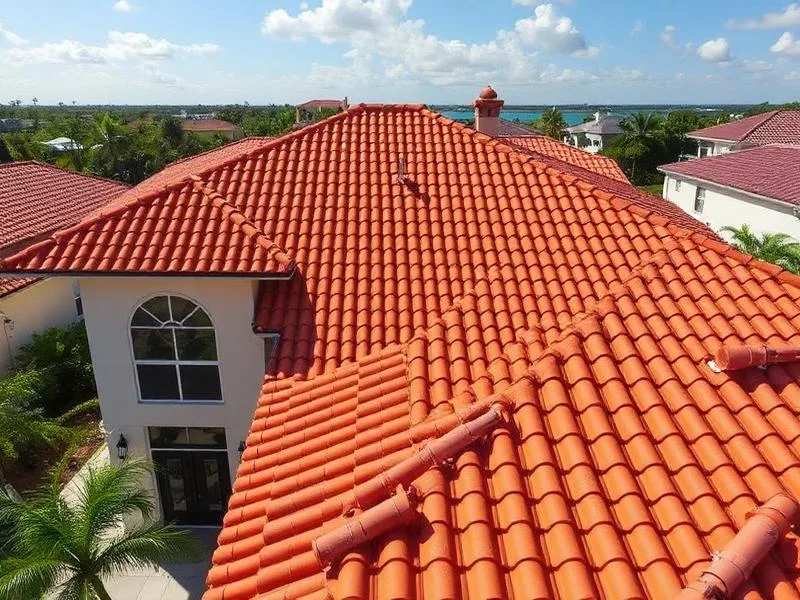
The hardest roofing job in Coral Gables isn't a new roof. It's fixing part of an old one so nobody can tell. A section of clay barrel tile on a house from the 1920s, the 1950s, or anywhere in between has a profile, a clay body, and fifty-plus years of sun and patina that no new tile arrives with. The city expects the roof to keep looking like it belongs, and the building code expects every tile under a permit to be an approved product. Here's how matching actually works.
What the code asks for
The Coral Gables Zoning Code lists the tile allowed on a single-family home. Two lines matter most for older houses:
- Barrel tile is specified as fire clay, three inches deep.
- Colored cement tile is allowed when the color runs through the body of the tile rather than being applied to the surface, and the Board of Architects approves the color for the surroundings.
So a repair on a clay barrel roof is expected to stay clay barrel, and a color change on a concrete tile roof goes through the Board of Architects. Our Coral Gables re-roofing guide covers the review process.
Why matching is difficult
Profiles get discontinued. Barrel tile comes in different widths, tapers, and depths, and manufacturers retire profiles. The exact tile on a 1960s roof may not have been made in decades.
Clay weathers. Terracotta darkens, picks up lichen, and develops a patina that varies slope by slope. A brand-new tile, even the right profile, reads bright orange next to it for years.
Approvals matter. In the High-Velocity Hurricane Zone, tile installed under a permit has to carry a current product approval, installed by the approved method. Our post on Miami-Dade product approvals explains why that narrows the list.
The approaches we use
Salvage and redistribute. On a partial repair, sound tiles from less visible slopes, the back of the house or behind a parapet, are carefully removed and moved to the visible repair area. New tile goes where it won't be seen from the street. The front of the house keeps its original weathered tile.
Blend. When there isn't enough salvage, new tile is mixed into the old across a whole slope rather than installed as a patch. A scattered blend reads as natural variation; a rectangle of new tile reads as a repair.
Color-matched new tile. Several manufacturers produce blended and weathered color ranges designed for older roofs. We bring samples up to the roof and compare them in daylight against the existing tile before anything is ordered. Samples matched in a showroom almost never match on a roof.
Mock-up first. On a visible repair or a historic home, we set a small mock-up for the homeowner, and the city if needed, before installing the full area.
Where salvaged tile is reinstalled, it goes back on with the attachment method and underlayment the current product approval requires, which is what the building inspector checks.
Historic homes
If the house is individually designated or contributes to a local historic district, exterior work needs a Certificate of Appropriateness from the city's historic preservation office. A true in-kind repair, same material, profile, and color, is the simplest case and is usually handled at staff level. Changing anything visible goes to the Historic Preservation Board. Matching well is what keeps a repair in the simple category.
Tile is rarely the problem: the underlayment is
On most older tile roofs, the tile itself is fine. Clay can last fifty years or more. What fails is the underlayment beneath it, the layer that does the actual waterproofing, which typically lasts 20 to 25 years in our heat. A Coral Gables tile roof that has started leaking in several places at once usually needs a re-underlayment, not new tile:
- The tile is lifted and stacked on the roof
- The deck is inspected, re-nailed to current code, and any rotted sheathing replaced
- New underlayment goes down, ideally a self-adhered membrane directly on the deck
- The same tile goes back on, with replacements blended in for any broken pieces
The house keeps its original tile and look, the roof gets a new waterproofing layer, and the self-adhered membrane can earn the secondary water resistance credit on your wind mitigation form. It's still a permitted roofing job and goes through the city's review, but reinstalling the existing tile is about as straightforward as Coral Gables approvals get.
Repair, re-underlay, or replace
- A few broken or slipped tiles, sound underlayment: a repair with salvaged or matched tile.
- Multiple leaks, tile in good condition, underlayment past 20 years: re-underlayment.
- Tile itself failing, or a large share broken: replacement, with a profile and color chosen through the Board of Architects.
Florida's 25% rule also applies: on a roof permitted before March 1, 2009, repairs to more than 25% of a roof section in 12 months require replacing that section. Our post on the 25% roof rule explains how it's measured.
Frequently asked questions
Can I replace clay barrel tile with concrete tile?
Concrete tile is on the city's allowed list, but changing material and appearance on a Coral Gables home goes through the Board of Architects, and historic homes have the additional preservation review. Matching clay with clay is the path of least resistance.
How many spare tiles should I keep?
As many as you have room for. After a re-roof or re-underlayment, we leave a stack of matching tile with the homeowner for future repairs. On an older roof, those spares are worth more than they look.
Will my insurance pay to match the whole roof?
Florida's matching statute generally requires insurers to make repaired areas reasonably match adjoining areas, but policies can limit it. Discontinued tile is where that question comes up most. Our post on roof claim denials covers matching disputes.
Can you match a tile I bring you?
Usually we can identify the profile and find the closest current product or a salvage source. Bring a whole tile, not a fragment.
A matching assessment
We assess older Coral Gables tile roofs by drone and from the attic, identify the tile profile, and price repair, re-underlayment, and replacement side by side, with samples matched on your roof, not in a showroom. See our Coral Gables roofing page, our tile roofing work, or book a free inspection.
SIA Roofing · Coral Gables office · 7811 Erwin Rd, Coral Gables, FL 33143 · (305) 481-9353 · Florida Certified Roofing Contractor CCC1334814.
Ready to Protect Your Home?
Schedule a free inspection with South Florida's most trusted roofing experts.