Re-Roofing in Coral Gables: Board of Architects Guide
Coral Gables is the one city in Miami-Dade where your roof is an architectural decision as much as a construction one. The city has its own list of materials a house is allowed to wear, a Board of Architects that looks at the roof before the building department does, and historic rules for a large share of its older homes. None of it is complicated once you know the order. Here's how a re-roof actually moves through the city, written from the roofer's side of the counter.
Why Coral Gables is different
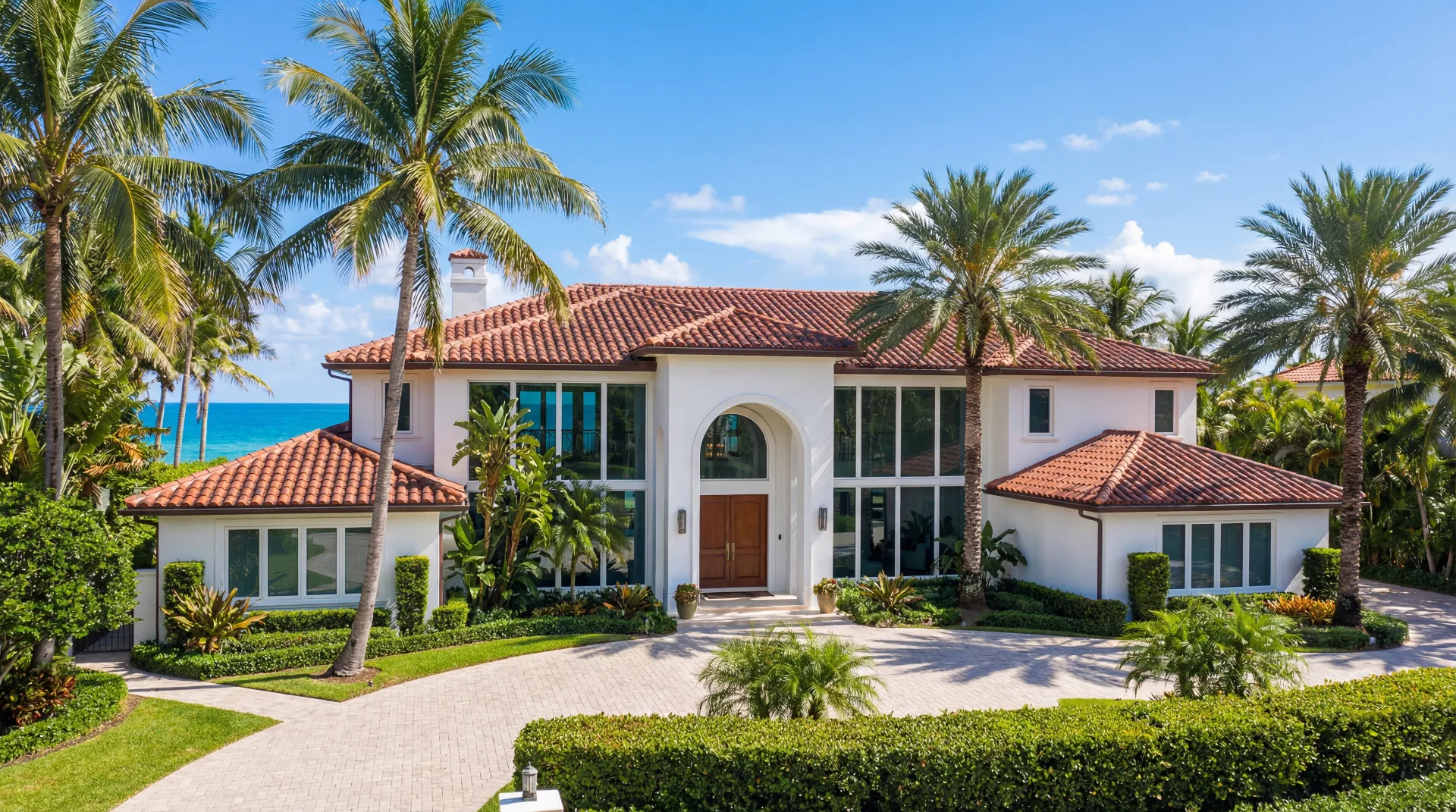
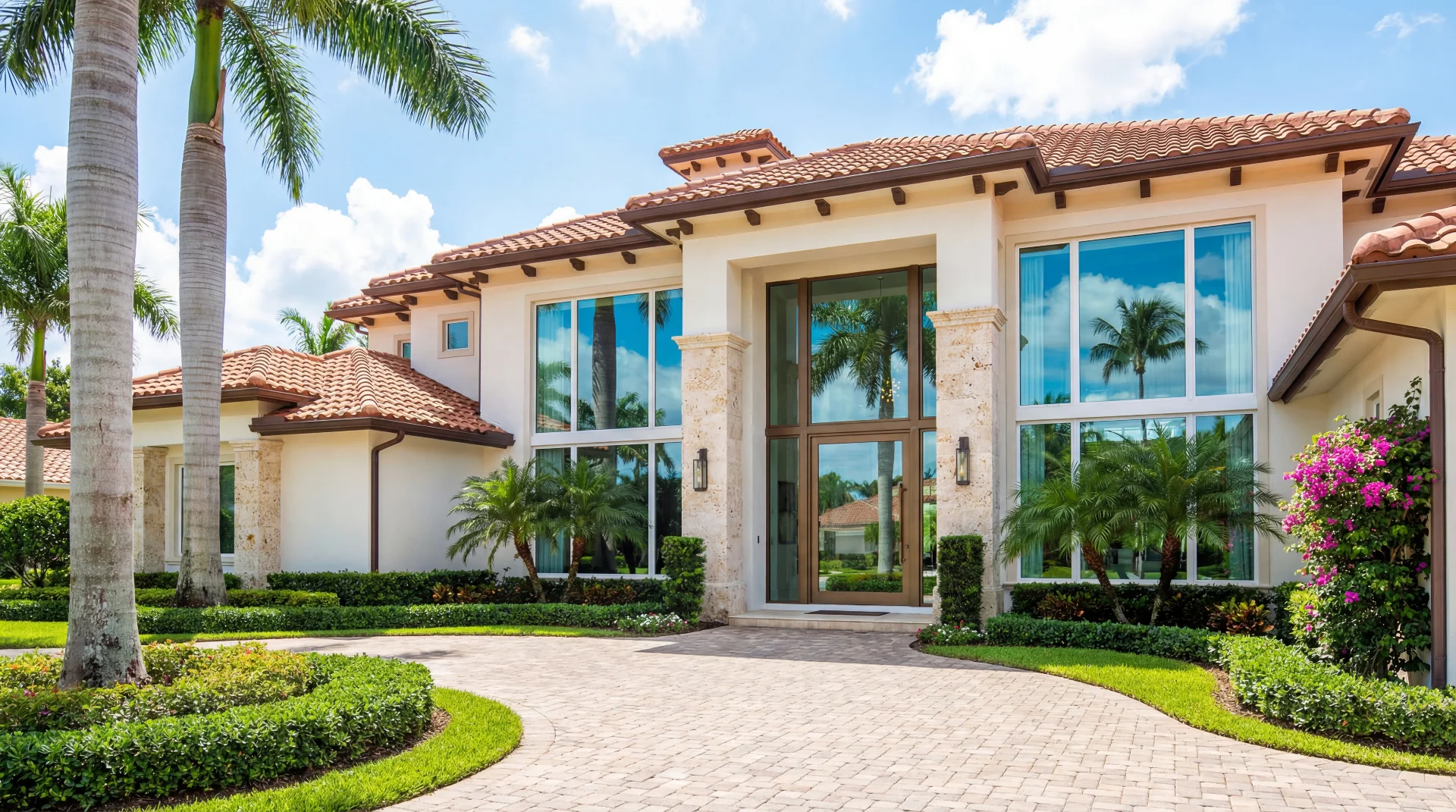
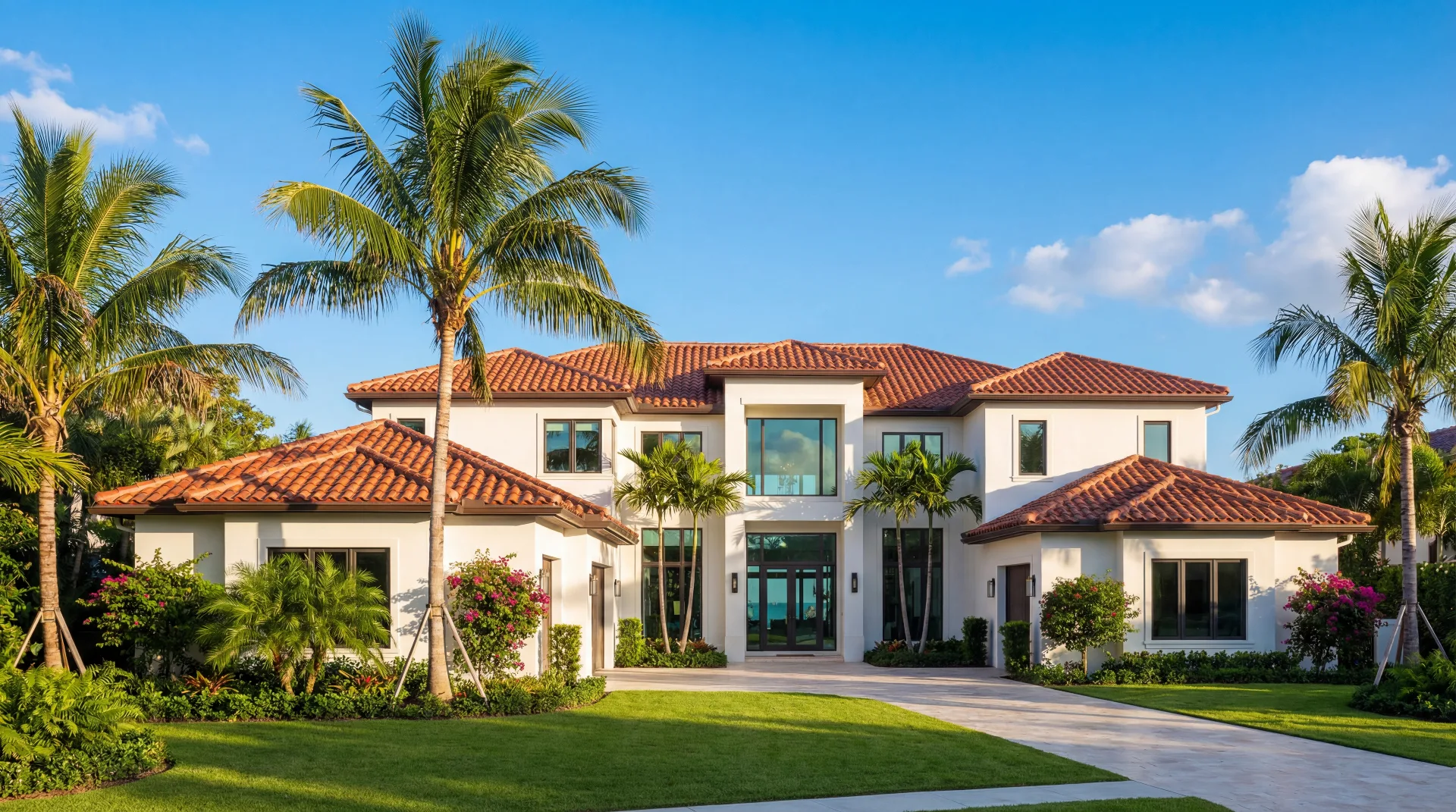
George Merrick planned Coral Gables in the 1920s as a Mediterranean Revival city, and the city still enforces that vocabulary through its zoning code. That's why the street views look the way they do: barrel tile, earth tones, very few asphalt shingles. In most of Miami-Dade, the building department's question is "does this roof meet the Florida Building Code?" In Coral Gables there's a second question first: "does this roof belong on this house and this street?"
What the zoning code allows on a house
Section 5-501 of the Coral Gables Zoning Code requires roofs on single-family homes, townhouses, and duplexes to be tile, coral rock slabs, slate, or copper in its natural state that is allowed to weather and patina. Section 5-505 then lists the pitched-roof materials in detail:
- Vitrified clay tile
- White concrete tile, finished as the code describes
- Colored cement tile, as long as the color runs through the tile rather than being applied to the surface, and the Board of Architects approves the color for the surrounding area
- Barrel tile, specified as fire clay, three inches deep
- Glazed tile, where the glaze is applied in the manufacturer's process
- Coral rock slabs laid shingle fashion, and thick-butt variegated slate
- White Bermuda roofs at a pitch of at least 5 in 12
- Copper, left natural
Two things are notable by their absence or their conditions:
- Asphalt shingles aren't on the list for single-family homes.
- Standing-seam metal is allowed on single-family homes only with approval from the full Board of Architects, as appropriate to the style and the neighborhood. It's prohibited in historic districts, needs Historic Preservation Board approval on designated homes, can't imitate another material, and can't be painted after installation.
Flat roofs on homes are allowed only in the specific situations Sections 5-502 and 5-503 describe. If part of your house is already flat, that section is re-roofed with an approved low-slope system on the same project.
The Board of Architects review
Before Coral Gables issues a roofing permit, the project goes through the Board of Architects. What the board looks at is the part people see: the tile profile, the material, and the color, in the context of the house and the block.
A submittal typically includes:
- Photos of the existing roof and the house
- The proposed tile or material, with the manufacturer's specifications
- A color sample
- The Miami-Dade product approval for the roofing system
How long it takes depends on what's changing. Replacing a roof with the same material and color is the simplest case; changing color, changing profile, or switching to metal gets a closer look. Budget the review into the schedule rather than discovering it after the contract is signed. It's one reason we tell Coral Gables homeowners to start planning a re-roof a few months before they want the crew on the roof.
Historic homes add one more step
If your home is individually designated on the Coral Gables Register of Historic Places, or it contributes to a local historic district, exterior work needs a Certificate of Appropriateness before the building permit. A like-for-like re-roof is usually handled at staff level. Bigger changes go to the Historic Preservation Board, which meets on a set schedule with submittal deadlines well ahead of each meeting.
If you don't know whether your house is designated, the city's historic resources office can tell you, and it's worth knowing before you choose a tile.
The building permit and inspections
Once the design side is approved, the roof follows the same High-Velocity Hurricane Zone process as anywhere in Miami-Dade:
- The uniform roofing permit application, with product approvals for every component
- A recorded Notice of Commencement
- Dry-in, in-progress, and final inspections
Every product has to carry a current approval, which is why your material choices in Coral Gables are narrowed twice: once by the zoning list and once by what's approved for the HVHZ. Our post on Miami-Dade product approvals explains that second filter.
The roof-to-wall rule most Coral Gables homes trigger
Florida's Existing Building Code adds a requirement that applies to a large share of Coral Gables houses. When the roof covering is replaced on a site-built single-family home in the wind-borne debris region with an insured value of $300,000 or more, the roof-to-wall connections have to be improved at the gable ends or all corners, as long as that can be done for no more than 15% of the cost of the re-roof. Homes permitted under the Florida Building Code, from March 2002 on, are exempt.
Most older Coral Gables homes are well over that value and were built long before 2002. The upside is that those straps also move a line on your wind mitigation form, which our line-by-line guide explains.
Repair or replace?
Not every Coral Gables roof problem means a new roof. Under Florida's 25% rule, a roof permitted after March 1, 2009 can be repaired to current code no matter how large the repair; an older roof that needs more than 25% of a section repaired in 12 months gets replaced. Our post on the 25% roof rule walks through it. In Coral Gables, the repair still has to use approved materials that match, which is the subject of our next post on barrel tile.
The order that saves time
- Get the roof inspected and measured, and pull the permit history
- Decide repair, re-underlayment, or replacement
- Choose the material and color from what the code allows and what's HVHZ-approved
- Board of Architects submittal, and a Certificate of Appropriateness if the home is historic
- Building permit and Notice of Commencement
- Installation and inspections
- New wind mitigation inspection after the final
Frequently asked questions
Can I put a shingle roof on my Coral Gables house?
Not on a single-family home under the current zoning code, which limits house roofs to tile, coral rock, slate, and natural copper, with standing-seam metal possible by full Board of Architects approval outside historic districts.
Do I need Board of Architects approval to replace my roof with the same tile?
The project still goes through the board before permitting; same-material, same-color replacements are the simplest to approve.
Can I change my roof color?
Possibly, if the Board of Architects approves the color for your house and street. Colored concrete tile has to be colored through the body of the tile, not surface-coated.
How long does a Coral Gables re-roof take?
The roofing itself is typically one to two weeks for tile. The approvals in front of it are what add time, so start early and plan for dry season.
Planning a Coral Gables re-roof
Our Coral Gables office handles roofs across the city, South Miami, Pinecrest, and Coconut Grove. We start with a free drone inspection and the permit history, then prepare the Board of Architects submittal with the tile, color, and product approvals already chosen. See our Coral Gables roofing page or book a free inspection.
SIA Roofing · Coral Gables office · 7811 Erwin Rd, Coral Gables, FL 33143 · (305) 481-9353 · Florida Certified Roofing Contractor CCC1334814. Zoning sections cited are from the Coral Gables Zoning Code; the city's Development Services Department has the final word on any specific property.
Ready to Protect Your Home?
Schedule a free inspection with South Florida's most trusted roofing experts.