Florida's 25% Roof Rule: Repair or Full Replacement?
Every few weeks a homeowner calls us with the same worry: "The other roofer said the code forces me to replace the whole roof." Sometimes that's true. Often it isn't — and since 2022, it's usually not true for newer roofs. The rule they're talking about is the Florida Building Code's 25% rule, and it's worth understanding before anyone quotes you a full replacement.
What the rule says
The rule lives in the Florida Building Code, Existing Building volume, Section 706.1.1. In plain language: if more than 25% of a roof area or roof section is repaired, replaced, or recovered within any 12-month period, the entire roof or roof section must be brought up to current code. In practice, "brought up to current code" means a full re-roof — new underlayment, deck re-nailing, current product approvals, the works.
The intent is sound. After Hurricane Andrew, the state didn't want patched-together roofs where half the surface is 30 years old and half is new, with no guarantee the old half meets any modern wind standard.
The 2022 exemption most people miss
Senate Bill 4-D, signed in May 2022, added an exception that changed the math for a lot of South Florida homes. If your roof — or the roof section being repaired — was built or replaced under the 2007 Florida Building Code or later, only the repaired portion has to meet current code. The 25% trigger doesn't apply.
The 2007 code took effect for permits applied for on or after March 1, 2009. So the practical test is:
- Roof permitted on or after March 1, 2009: repair what's damaged, to current code. No forced replacement, regardless of how much area is involved.
- Roof permitted before March 1, 2009: the 25% rule applies. Cross the threshold in a 12-month window and the whole roof or section must be replaced.
That date is the single most important fact about your roof after a storm. It's on the permit record at your county or city building department, and any competent roofer will look it up before writing a proposal.
What "roof section" means
The rule measures 25% of a roof section, not always the whole house. A section is a part of the roof separated from the rest by an expansion joint, a parapet wall, a change in elevation (not counting hips and ridges), or a change in roof type. A single-story addition with its own lower roof, a flat-roofed garage attached to a pitched main house, or a separate wing at a different height — each of those can be its own section.
Why it matters: 400 square feet of damage on a 3,000-square-foot roof is 13% of the whole, but if it's on a 1,200-square-foot section, it's 33% of that section. The section rule can push a repair over the line — or keep it under, if the damage is confined to a large section.
The 12-month clock
The 25% accumulates. A 10% repair in February and a 20% repair in September on the same pre-2009 roof section add up to 30% within 12 months, and the second permit is where the building department will apply the rule. Keep your repair permits and dates together; if you're near the line, timing a second repair matters.
What this means after a storm
Here's how we walk through it on a real roof:
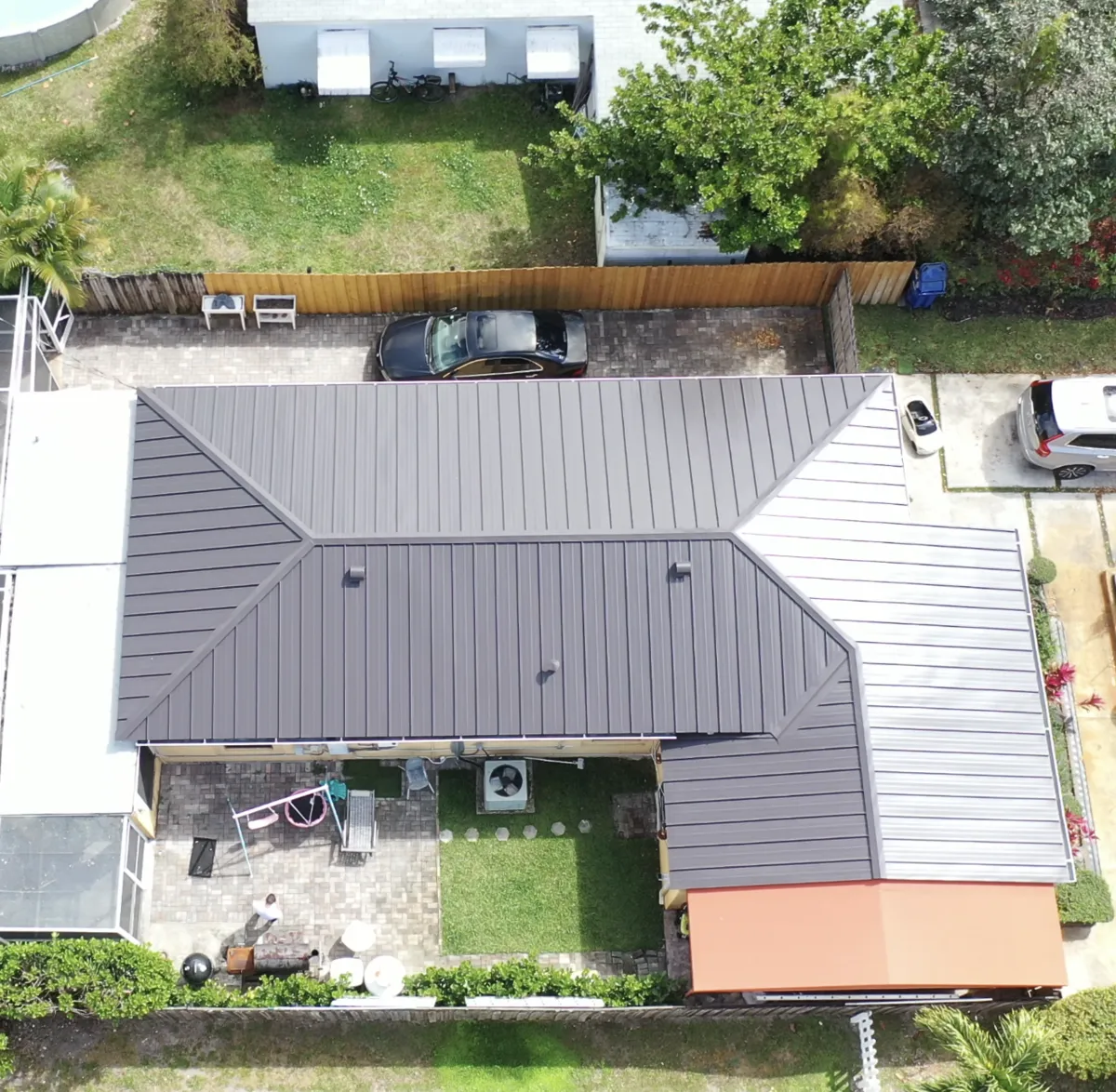
- Measure the damage honestly. Storm damage is often concentrated on one or two exposures. A drone inspection gives an accurate area measurement without anyone walking a damaged roof.
- Pull the permit date. Post-March-2009 roof: repair to current code, and the conversation is about scope and cost, not the rule. Pre-2009 roof: compare the damaged area to the section.
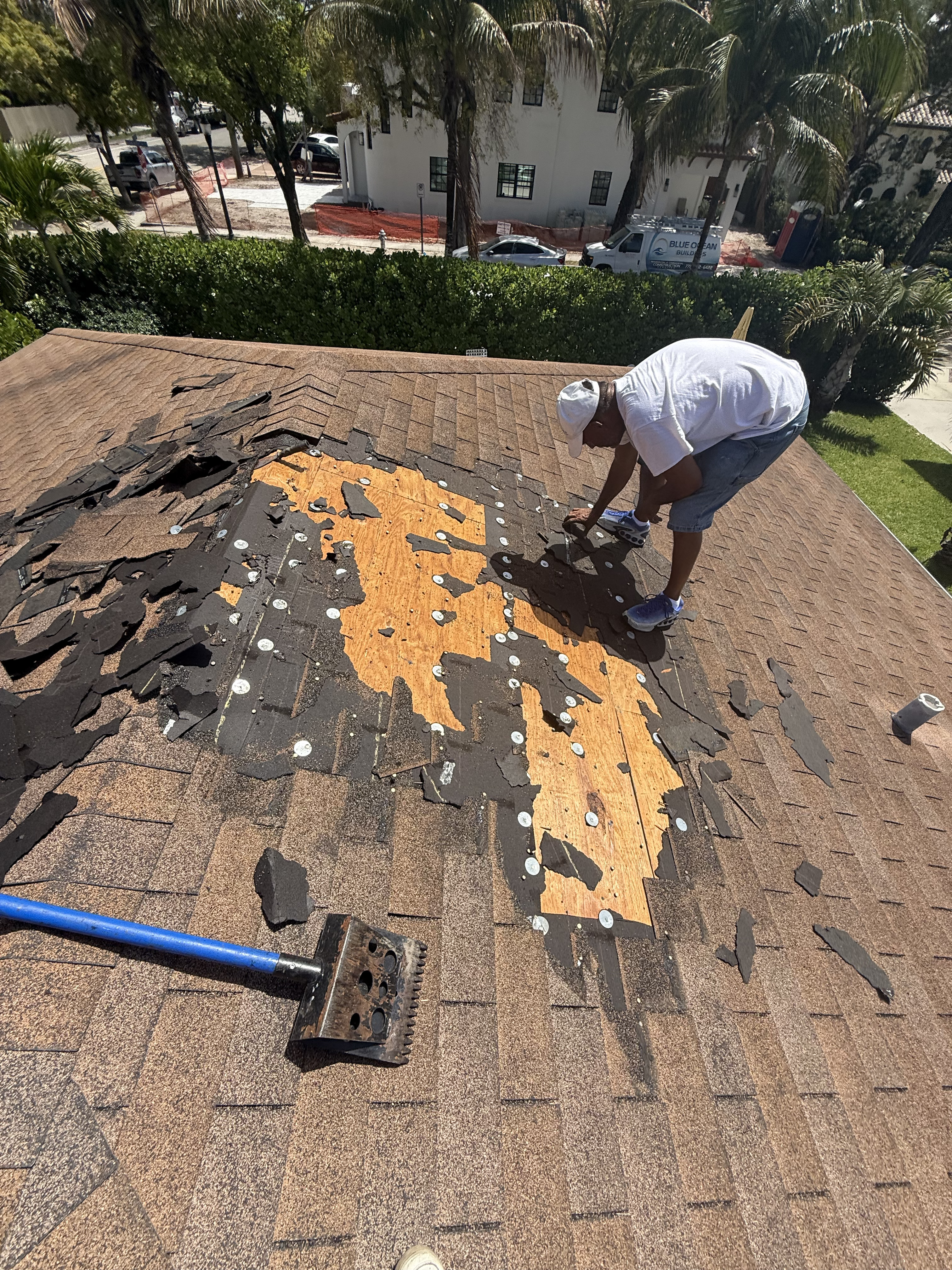
- Under 25% on a pre-2009 roof: a permitted roof repair with current materials. Expect the repaired area to be brought to current code (matching product approvals, proper fastening) even though the rest of the roof isn't touched.
- Over 25% on a pre-2009 roof: the section — or the whole roof, if it's one section — gets replaced. That's not a roofer's preference; the permit won't be issued otherwise.
One thing to be careful about: a contractor who suggests doing a large repair "without pulling a permit" to dodge the rule. In Miami-Dade and Broward, most roof repairs require a permit, unpermitted work shows up in the permit history when you sell, and it can void insurance coverage. Don't.
Repair vs. replacement when you have the choice
On a post-2009 roof, the code lets you repair — but sometimes replacement is still the better decision:
- Age of the covering. A shingle roof at 15+ years or a tile underlayment at 20+ years in our climate is near end of life. Spending $6,000 on a repair that buys two more years is rarely the right call.
- Insurance position. Carriers increasingly apply roof-age underwriting. A new roof resets that conversation and usually earns wind mitigation credits that offset part of the cost.
- Matching. Discontinued tile profiles and faded shingles make a large repair visibly different from the rest of the roof. In neighborhoods with architectural review — Coral Gables, parts of Boca — that can be an issue on its own.
- What's under it. If the deck is rotted or the roof-to-wall connections are toe-nailed, a re-roof is when those get fixed.
Realistic South Florida numbers in 2026: storm repairs typically run from about $1,000 for a small, accessible shingle area to $6,000 or more where decking is involved, while a full roof replacement starts in the high teens for shingle and runs into the $30,000–$60,000 range for tile, depending on size and complexity.
Frequently asked questions
Does the 25% rule apply to insurance claims?
The rule is a building code requirement, not an insurance rule. But if the code requires a full replacement because the damage exceeds 25% of a pre-2009 roof, most policies cover the code-required work under "ordinance or law" coverage, up to that coverage's limit. Check your declarations page for the ordinance or law percentage.
My roof was replaced in 2005. Does the exemption help me?
No. The exemption applies to roofs built under the 2007 code or later (permits from March 1, 2009). A 2005 roof falls under the original 25% rule.
Can I replace just one side of the roof?
If that side is a separate roof section under the code definition, yes. If it's simply one slope of the same section, it counts toward the 25% of that section.
Who decides whether the rule applies?
The local building department, at permit review. Your roofer's job is to measure accurately and pull the right permit history so there are no surprises at the counter.
Get the permit date before you get a quote
If you have storm damage anywhere in Miami-Dade, Broward, or Palm Beach, the first thing we do is measure the damaged area by drone and pull the roof's permit history. You'll get a written scope that says which side of the 25% rule you're on and why — before anyone talks about replacement. Book a free inspection and we'll have it to you within the week.
SIA Roofing · Florida Certified Roofing Contractor CCC1334814 · (305) 333-2893. Code references are to the Florida Building Code, Existing Building, 8th Edition (2023); your local building department has the final say.
Ready to Protect Your Home?
Schedule a free inspection with South Florida's most trusted roofing experts.