Roof Repair & Maintenance Tips for South Florida Homeowners: A 2026 Guide
If you own a home anywhere from Homestead up to Jupiter, your roof is the single hardest-working part of your house. It takes the full force of hurricane winds, nine months of sun that can bake asphalt shingles into chalk, daily afternoon downpours, and ocean air that quietly eats at metal flashings. On top of all that, Florida's insurance landscape has changed fast, and your roof's age and condition now have a direct line to what you pay — and whether you can get covered at all.
At SIA Roofing, we're a family-owned company that inspects and repairs hundreds of roofs every year across Miami-Dade, Broward, and Palm Beach. The good news: most of the expensive problems we get called out for could have been caught — and fixed for a fraction of the cost — with a little proactive maintenance. This guide walks through everything a South Florida homeowner should know: the warning signs to watch for, a season-by-season maintenance rhythm, material-specific care, algae control, insurance rules, 2026 cost ranges, and how to pick the right local roofer.
What's in this guide
- Why South Florida roofs wear out faster (and what that means for you)
- 10 warning signs your roof needs repair — now
- The South Florida maintenance calendar (dry season, hurricane season, post-storm)
- Material-specific care: shingle, tile, flat, and metal roofs
- Algae, mildew, and black streaks — what actually works
- Florida's roof age & insurance rules (including 2026 HB 815)
- DIY vs. calling a pro — and what roof repair costs in 2026
- How to vet a South Florida roofing contractor
- City notes: Miami, Fort Lauderdale, West Palm Beach & beyond
- Frequently asked questions
Why South Florida roofs wear out faster
South Florida is what the building code calls a High-Velocity Hurricane Zone (HVHZ). It's the only region in the United States with its own hurricane-rated building code on top of the Florida Building Code, and it exists because of what we all remember from Hurricane Andrew. That history shows up on your roof every single day — in the products installed, the fasteners used, and how quickly everything degrades.
Four forces work against your roof down here, and understanding them is the foundation of smart maintenance:
- UV radiation. South Florida sees some of the highest UV indexes in the country. UV breaks down the oils and polymers in asphalt shingles, fades tile glaze, and chalks paint on metal panels.
- Humidity and heat. Our dew points sit in the 70s for months. That keeps roof surfaces damp long enough for algae, mildew, and wood rot in the decking underneath.
- Salt air. If you live east of I-95 — Miami Beach, Coral Gables, Hollywood Beach, Lauderdale-by-the-Sea, Boynton Beach, Palm Beach — airborne salt accelerates corrosion on nails, flashings, and metal roofs. Coastal roofs age noticeably faster than inland ones.
- Wind and driving rain. Even an ordinary summer thunderstorm can push rain sideways at 40 mph. Hurricanes are a different level, but tropical systems and squalls are what cause most of the leaks we repair all year.
The practical takeaway: a roof that would last 25 years in Georgia might give you 15–18 in Miami. That's not a reason to worry — it's a reason to maintain. Proactive care extends a Florida roof's life significantly and saves thousands in avoided repairs.
10 warning signs your roof needs repair — now
Most leaks don't start as leaks. They start as small, boring problems that anyone can spot from the ground or a driveway. Here are the ten we see most often on South Florida homes:
- Missing, cracked, or curling shingles. Florida heat causes asphalt shingles to lose flexibility and curl at the corners. Once a shingle curls, wind gets under it and the edge tears.
- Slipped or cracked roof tiles. Concrete and clay tiles can slip out of alignment after a storm or crack from falling branches. Even a single broken tile lets water reach the underlayment.
- Damaged or rusted flashing. Flashing is the metal that seals the transitions — around chimneys, skylights, vents, and walls. It's the number one place we find leaks, especially on coastal homes.
- Water stains on ceilings or walls. Yellow or brown rings, peeling paint, or bubbling drywall are almost always roof-related. By the time you see them inside, water has been traveling for a while.
- Daylight in the attic. If you can see pinpoints of light through your roof deck, water can follow. Schedule an attic check at least once a year.
- A sagging or uneven roof line. Sagging almost always means the decking or trusses have taken on moisture. This is never cosmetic — it's structural.
- Black streaks or green patches. Gloeocapsa magma algae (those long black streaks) and mildew trap moisture on the surface, shorten shingle life, and are a tell-tale sign the roof isn't being cleaned.
- Granules in the gutters. Asphalt shingles shed more and more granules as they age. Big piles in gutters and downspouts mean the shingles are near the end of their useful life.
- A sudden spike in your electric bill. Compromised roofing and insulation let heat pour into the attic. If your bill jumps and nothing else changed, your roof may be the reason.
- Gutters or soffits pulling away. Wind and water damage tend to show first at the roof edges. Pulled gutters often mean rotted fascia behind them.
Rule of thumb: if you spot two or more of these, schedule a professional inspection this month. In South Florida, small problems become expensive ones faster than anywhere else in the country.
The South Florida maintenance calendar
Most national maintenance guides are written for places with four clear seasons. Down here we really have two — a dry season (roughly November through May) and a wet / hurricane season (June through November). Match your roof care to that rhythm and you'll stay ahead of almost every problem.
Dry season (November – May): clean, inspect, and fix
This is when our team does most of our repair work. The weather cooperates, materials install cleanly, and you're setting up the roof for the storms ahead. During the dry season you want to:
- Clear gutters and downspouts of leaves, seed pods, and blown-in debris.
- Trim any tree branches within six feet of the roof — especially gumbo limbos, oaks, and royal poincianas that shed heavily.
- Wash off light algae and mildew using a low-pressure soft wash (never a pressure washer on shingles).
- Seal or replace cracked caulking around vents, skylights, and flashings.
- Schedule a professional inspection in March or April — before roofers get slammed with emergency storm work.
Pre-hurricane (April – May): the 90-day window
The official Atlantic hurricane season starts June 1. The smartest homeowners begin prepping 90 days out. By late May, every repair or replacement should be finished. During this window, confirm:
- Tile attachment is intact and no tiles are slipped, cracked, or missing.
- Ridge and hip caps are secured — these are the first things to blow off in a hurricane.
- Metal roof fasteners and panel seams meet HVHZ requirements.
- Your soffit vents, drip edge, and fascia are tight and rot-free.
- You have a current wind mitigation inspection on file with your insurer (it often lowers premiums).
Hurricane season (June – November): watch, don't wait
During the active season, maintenance shifts to vigilance. Every named storm that passes close by — even one that stays 100 miles offshore — can loosen tiles or lift shingle edges. After any tropical system, take five minutes to look at your roof from the ground with binoculars or your phone camera zoomed in. If you see anything unusual, get it checked before the next storm rolls through.
Post-storm checklist
Within 48 hours of any significant storm, we recommend this sequence:
- Walk the property from the ground, looking up at all four sides of the roof.
- Check the yard and gutters for granules, shingle pieces, tile shards, or bent metal.
- Look for daylight or fresh water stains in the attic and upper ceilings.
- Photograph anything suspicious — time-stamped photos are crucial for insurance claims.
- Call a licensed roofer for a documented damage assessment before filing a claim.
Never climb on a wet, post-storm roof yourself. Slippery shingles and loose tiles send people to the ER every hurricane season. A free inspection from a local roofer is always safer than a ladder and a hunch.
Material-specific maintenance: shingle, tile, flat & metal
Every roof type has its own weak points in the Florida climate. Here's how to think about each:
Asphalt shingle roofs
Shingles are still the most common roofing material in South Florida because they're affordable and fast to install. Architectural shingles last roughly 15–20 years here; three-tab shingles closer to 10–12. Watch for curling edges, bald spots, and heavy granule loss in the gutters. Replace cracked pipe boots and re-seal flashings every 3–5 years. If your shingle roof is past year 15 and starting to look tired, get an inspection — both to extend its life and to satisfy your insurance carrier.
Concrete and clay tile roofs
Tile is the iconic South Florida roof — you see it everywhere from Coral Gables to Boca Raton — and for good reason. A well-installed tile roof can last 40–50 years. The tiles themselves are almost indestructible, but the underlayment below them is what actually keeps water out. That underlayment often needs replacement at the 20-year mark even when the tiles look perfect. Key maintenance items:
- Replace cracked, chipped, or slipped tiles promptly — a single broken tile can funnel water straight to the decking.
- Keep the roof clear of heavy debris; tiles can crack under impact from branches.
- Re-bed ridge and hip caps every 10–15 years as mortar or foam adhesive degrades.
- Have the underlayment inspected when the roof hits 18–20 years old. A tile relay (reusing existing tiles with fresh underlayment) is often far cheaper than a full replacement.
Flat and low-slope roofs
Flat roofs — modified bitumen, TPO, and GAF-style systems — are common on additions, screened porches, Art Deco homes in Miami Beach, and many commercial buildings. The biggest enemy of a flat roof is standing water (ponding). Check after every heavy rain that water drains within 48 hours. Inspect seams and flashings twice a year, and reapply reflective coatings every 5–7 years to cut UV damage and lower indoor temperatures.
Metal roofs
Standing seam metal roofs have become one of the best-performing choices for South Florida homes — they shrug off hurricane winds, reflect heat, and often last 40+ years. Maintenance is simple but not zero:
- Inspect fasteners and seam clips annually; salt air is especially hard on hardware.
- Rinse coastal roofs with fresh water a few times a year to remove salt film.
- Touch up any scratches that expose bare metal to prevent rust starting.
- Confirm any replacement panels carry a Miami-Dade NOA if you're in the HVHZ.
Algae, mildew & black streaks — what actually works
Those long, dark streaks running down South Florida roofs aren't dirt. They're a blue-green algae called Gloeocapsa magma, and they thrive on exactly what we have in abundance: warmth, moisture, and the limestone filler in asphalt shingles. Left alone, algae trap heat and moisture on the roof, shorten shingle life, and eventually kill the look of your home from the curb.
Here's what actually works, in order of effectiveness:
- Soft-wash cleaning with a diluted sodium hypochlorite solution. This is the method roofing manufacturers actually approve. It kills algae at the root without stripping granules. Done annually on heavily shaded roofs.
- Installing zinc or copper strips along the ridge. When rainwater runs over the strip, it releases trace metal ions that stop algae from regrowing. Effective for 10+ years.
- Upgrading to algae-resistant shingles at your next replacement. Major shingle brands now offer copper-granule shingles with 10–25 year algae-resistance warranties — these are worth every penny in South Florida.
- Trimming back trees to let the roof dry faster after rain. Algae love shade.
What to avoid: pressure washing. A pressure washer is the fastest way to strip asphalt granules, crack tiles, and force water under laps. If a company wants to pressure-wash your Florida roof, call someone else.
Florida's roof age & insurance rules (including 2026 HB 815)
In Florida, your roof isn't just shelter — it's an insurance credential. The rules changed recently, and they matter even more for homes in South Florida because of our wind-driven risk. Here's the current, simple version:
- Under 15 years. Insurers cannot refuse to issue or renew your policy solely because of roof age.
- 15–25 years. You can request an inspection by an authorized inspector. If the inspection shows 5+ years of useful life remaining, the insurer cannot require replacement based on age alone.
- 25+ years (shingle). Under §627.7011, insurers have historically been allowed to refuse to issue or renew. Citizens considers shingle roofs at 25+ years (and tile/metal at 50+) as "old." Maintenance documentation becomes critical.
- HB 815 (2026). New legislation aims to close the "age-only" loophole — preventing insurers from refusing coverage solely because of roof age if the roof is documented to be in good condition. Effective date July 1, 2026; talk to your agent for the latest.
Two takeaways for South Florida homeowners:
- Document everything. Keep inspection reports, receipts, maintenance records, and before/after photos. If an insurer questions the roof's condition, that paper trail is your best defense.
- Get a wind mitigation inspection. These aren't required, but they often lower premiums significantly — especially on HVHZ homes with NOA-rated products, hurricane straps, and secondary water barriers.
DIY vs. calling a pro — and what roof repair costs in 2026
We get asked all the time what homeowners should tackle themselves versus hire out. Our honest answer:
Safe to DIY (if you're comfortable on a ladder)
- Cleaning gutters and downspouts.
- Trimming back branches that overhang the roof.
- Looking in the attic with a flashlight for moisture, daylight, or mold.
- Photographing the roof from the ground for your records.
Call a licensed roofer
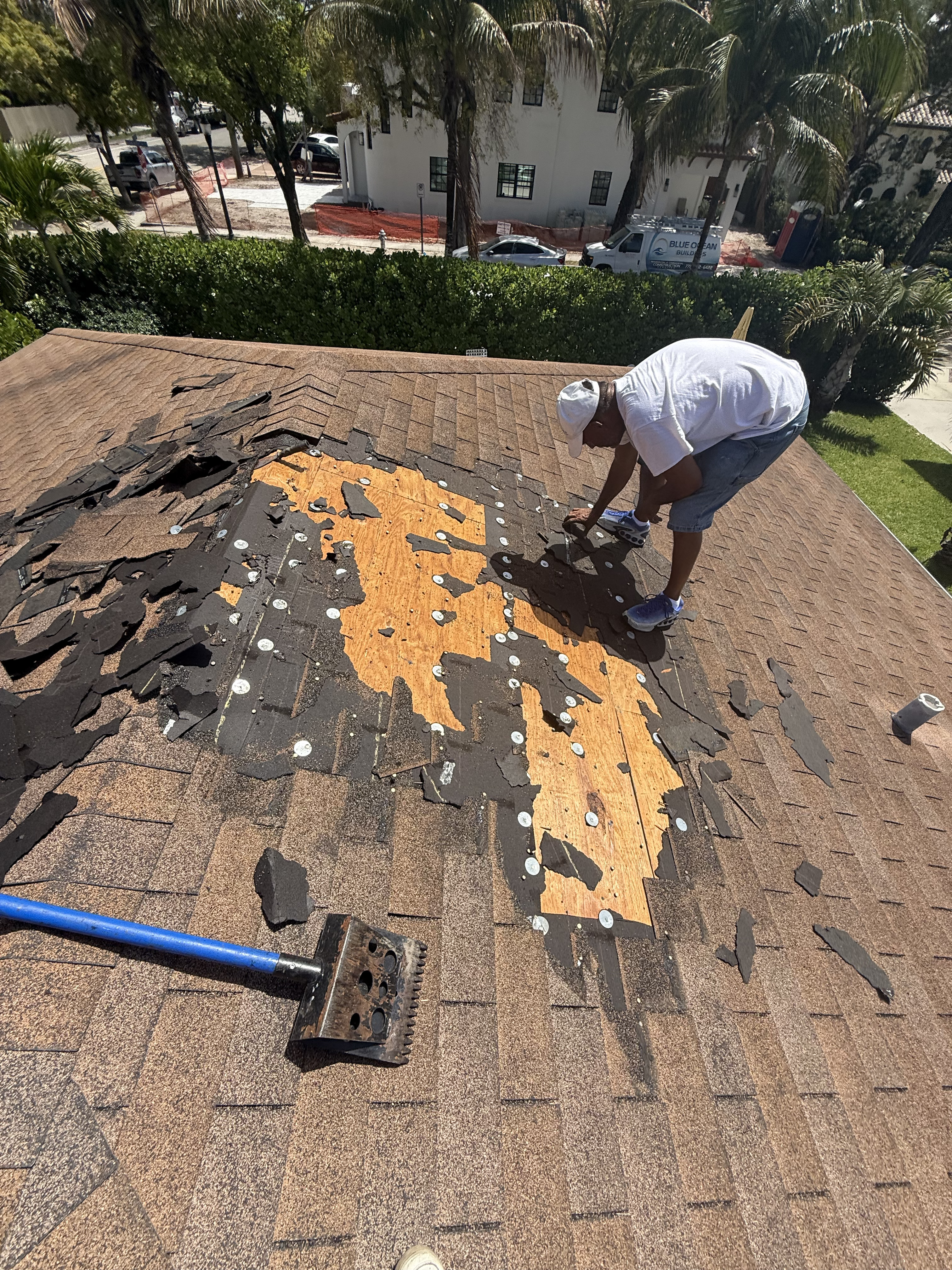
- Anything involving actual repairs — shingles, tiles, flashing, pipe boots.
- Anything after a storm with visible damage.
- Soft washing / cleaning (too easy to damage the roof or injure yourself).
- Pre-hurricane annual inspection, especially as the roof ages past 10 years.
- Insurance claim documentation.
2026 repair cost ranges in South Florida
Costs vary by roof type, accessibility, and the extent of hidden damage, but here are realistic ballpark ranges we see across Miami-Dade, Broward, and Palm Beach:
- Minor leak, easy access: $700–$1,200 (asphalt shingle) · $1,000–$2,500 (tile / metal)
- Moderate repair / flashing: $1,000–$2,400 (asphalt shingle) · $1,800–$3,500 (tile / metal)
- Decking rot / hidden damage: $1,500–$4,000+ (asphalt shingle) · $2,500–$6,000+ (tile / metal)
- Soft-wash cleaning (whole roof): $350–$800 (asphalt shingle) · $500–$1,200 (tile / metal)
A few caveats: labor costs in South Florida tend to sit at the higher end of national ranges (steep pitches, HVHZ requirements, strict permitting). Ballparks are useful, but the only number that matters is the one on a written estimate from a licensed contractor who has actually seen your roof.
How to vet a South Florida roofing contractor
After a storm, everyone gets pitched by out-of-state storm chasers knocking on doors. Here's what separates a real South Florida roofer from a trunk-slammer:
- Florida state license. Ask for the CCC (Certified Roofing Contractor) or CGC license number and verify it at MyFloridaLicense.com. No license, no conversation.
- Active insurance. A reputable roofer carries both general liability and workers' comp. Ask for current certificates — not a promise.
- Local address and history. "Local" means a verifiable office in Miami-Dade, Broward, or Palm Beach, not a PO box. Longevity matters after a storm.
- NOA-rated products. Anything installed in the HVHZ (all of Miami-Dade and most of Broward) must carry a Miami-Dade Notice of Acceptance. Ask what products they plan to use and look up the NOA yourself.
- Wind mitigation expertise. A roofer who understands wind mitigation will install and document the work in ways that help your insurance later.
- Written, itemized estimates. Be wary of one-line quotes. Good estimates spell out tear-off, underlayment type, drip edge, fasteners, vents, permits, and cleanup.
- Honest about what you do and don't need. If every salesperson says "full replacement," get a second opinion. Many roofs can be repaired for a fraction of that cost.
At SIA Roofing, every inspection comes with a clear written report, photos of whatever we find, and no-pressure recommendations. We'd rather earn your trust today than push a job you don't need.
City notes: Miami, Fort Lauderdale, West Palm Beach & beyond
Every South Florida city has its own quirks — architectural style, tree canopy, salt exposure, and neighborhood age. A few local notes from our crews:
Miami, Miami Beach, Coral Gables, Aventura & Miami Shores
Coastal salt air is the defining factor. Metal flashings, drip edge, and fasteners corrode faster — we see five-year-old roofs in Miami Beach that look older than ten-year-old roofs in Doral. Tile is common and benefits from a relay at 20 years. Art Deco homes in South Beach often have flat roofs that need coating refreshes every five years. All Miami-Dade homes are in the HVHZ, so every product installed must carry an NOA.
Fort Lauderdale, Hollywood, Pembroke Pines, Coral Springs, Pompano Beach & Plantation
Broward roofs face the same HVHZ rules as Miami-Dade. Homes in Coral Springs, Pembroke Pines, and Weston tend to be newer (1990s–2010s) and are right in the zone where shingle roofs are hitting that 15–20 year insurance mark. In eastern Broward — Hollywood, Lauderdale-by-the-Sea, Pompano Beach — salt exposure is significant. Inland in Plantation and Sunrise, the big threat is ficus and oak trees depositing debris and cracking tiles.
West Palm Beach, Boca Raton, Delray Beach, Boynton Beach, Wellington & Jupiter
Palm Beach County sits on the edge of the HVHZ — wind requirements are still strict, and NOA products are still common. Boca Raton and Delray Beach homes skew upscale with a lot of tile and some slate. Wellington has older rural roofs with big tree canopies (expect more debris and algae). West Palm Beach itself has a wide mix, from historic El Cid homes with old flat roofs to newer communities where shingle upkeep is the main story. Jupiter and Juno Beach coastal homes deal with salt and wind together.
Frequently asked questions
How often should I have my roof inspected in South Florida?
At least once a year, ideally in March or April before hurricane season. If the roof is over 10 years old, twice a year — once pre-season and once after any major storm system — is a smart move. SIA Roofing offers free inspections across Miami-Dade, Broward, and Palm Beach.
Can I just clean my roof with a pressure washer?
Please don't. Pressure washing strips granules off asphalt shingles, cracks older tiles, and can force water under flashings. A low-pressure "soft wash" with the right cleaning solution is the only method we recommend for asphalt, and careful low-pressure rinsing for tile.
Will my homeowners insurance pay for roof repairs?
Usually, yes — if the damage came from a covered event like a storm, falling debris, or a sudden and accidental failure. Normal wear and tear, lack of maintenance, or pre-existing issues generally aren't covered. Document everything and involve a licensed roofer early in the claim.
My roof is 20 years old. Do I need to replace it?
Not automatically. Under current Florida law, if a roof is 15+ years old you can have an authorized inspector verify it has 5+ years of useful life remaining, and the insurer can't require replacement based on age alone. For 2026, HB 815 is expected to expand that protection further. Get an honest inspection before assuming replacement is the only option.
What's the difference between a roof repair and a roof replacement?
Repair means addressing specific problem areas — a few cracked tiles, failed flashing, a leaking pipe boot. Replacement means tearing off the existing roof system and installing a new one. In South Florida, if less than 25% of the roof is damaged and the underlying structure is sound, repair is almost always the more cost-effective choice.
Do I really need a permit for a roof repair in Miami-Dade, Broward, or Palm Beach?
For anything more than a minor repair, yes. A reputable roofer pulls the permit, schedules inspections, and handles the paperwork. Unpermitted work can cause real problems later when you sell the home or file an insurance claim.
The bottom line
Roofs in South Florida aren't a "set it and forget it" part of the house. The same climate that makes this a beautiful place to live is relentlessly hard on what's over your head. But it's also predictable. Inspect twice a year, handle small problems before they grow, pay attention to algae and flashings, and keep records you can hand to your insurer. Do those things and a Florida roof will give you every year it's supposed to.
If you haven't had your roof looked at in the last twelve months, now's the time. We'd be glad to take a look.
**Free Roof Inspection — Miami-Dade, Broward & Palm Beach.** Licensed, insured, family-owned. No pressure, no games — just a written report and honest recommendations. Call SIA Roofing at (305) 333-2893 or book online at siaroofing.com.
Ready to Protect Your Home?
Schedule a free inspection with South Florida's most trusted roofing experts.