Wind Mitigation Form OIR-B1-1802, Line by Line
Florida's wind mitigation form is two pages long, and most homeowners never read it. That's a mistake, because every checkbox on it is money: insurers are required by law to give you a premium credit for each hurricane-resistant feature the form documents (§ 627.0629, Florida Statutes). The form is called the Uniform Mitigation Verification Inspection Form, OIR-B1-1802, and it's the same document for every carrier in the state, including Citizens.
Here's what each section actually asks, what the inspector has to photograph, and where South Florida roofs typically leave credits on the table.
The basics before the boxes
- Who fills it out: a qualified inspector as defined in § 627.711 — a licensed home inspector with hurricane-mitigation training, a licensed general, building, or residential contractor, a professional engineer, an architect, or a certified building inspector. Ask to see the license number that goes on page two.
- What it costs: typically $75–$150 as a standalone inspection.
- How long it's good for: five years, unless the roof or openings change. After a re-roof, get a new one — that's usually when the biggest credits appear.
- What the inspector needs: photos of every attribute claimed. No photo, no credit. Attic access is essential.
Now, the seven sections.
Section 1 — Building code
This asks when the home was built or when the permit was applied for. Homes permitted under the 2001 Florida Building Code or later (permit applications on or after March 1, 2002) get the credit. In the High-Velocity Hurricane Zone — Miami-Dade and Broward — homes built under the South Florida Building Code from September 1, 1994 also qualify, because that code already carried post-Andrew wind provisions.
If your house is older, don't worry: this section is just one of seven, and the roof sections below matter more.
Section 2 — Roof covering
The question is whether the roof covering meets the Florida Building Code. The inspector needs the roof permit date and, for HVHZ homes, the product approval (a Miami-Dade NOA) for the covering. A roof permitted on or after March 1, 2002 (or September 1, 1994 in Miami-Dade and Broward) with a current product approval checks the box.
Where credits get lost: an old roof with no permit record, or a "repair" that was really a partial replacement done without a permit. The permit history is public; the inspector will look.
Section 3 — Roof deck attachment
How the plywood is nailed to the trusses. This is checked from the attic with a gauge and a flashlight:
- A: 6d nails at 6 inches on the edges and 12 inches in the field — the weakest, common on pre-1990s homes.
- B: 8d nails at 6 and 12 inches.
- C: 8d nails at 6 inches on both the edges and the field — the strongest wood-deck option and the current HVHZ standard.
- D: reinforced concrete or other engineered deck.
Every full re-roof in South Florida requires the deck to be re-nailed to the current spacing, which is why a re-roof almost always moves this line from A or B to C. We photograph the nailing pattern from the attic during the job so the evidence is in your file before the underlayment covers it.
Section 4 — Roof-to-wall attachment
How the trusses are tied to the walls, also checked from the attic:
- Toe nails — nails driven at an angle through the truss into the top plate. Minimal credit.
- Clips — metal connectors on one side of the truss.
- Single wraps — a strap that wraps over the truss and fastens on one side.
- Double wraps — straps on both sides. The best credit for wood-frame roofs.
On older homes this is the section most worth upgrading. Retrofitting straps is done from the attic or, during a re-roof, from above with the deck open.
Section 5 — Roof geometry
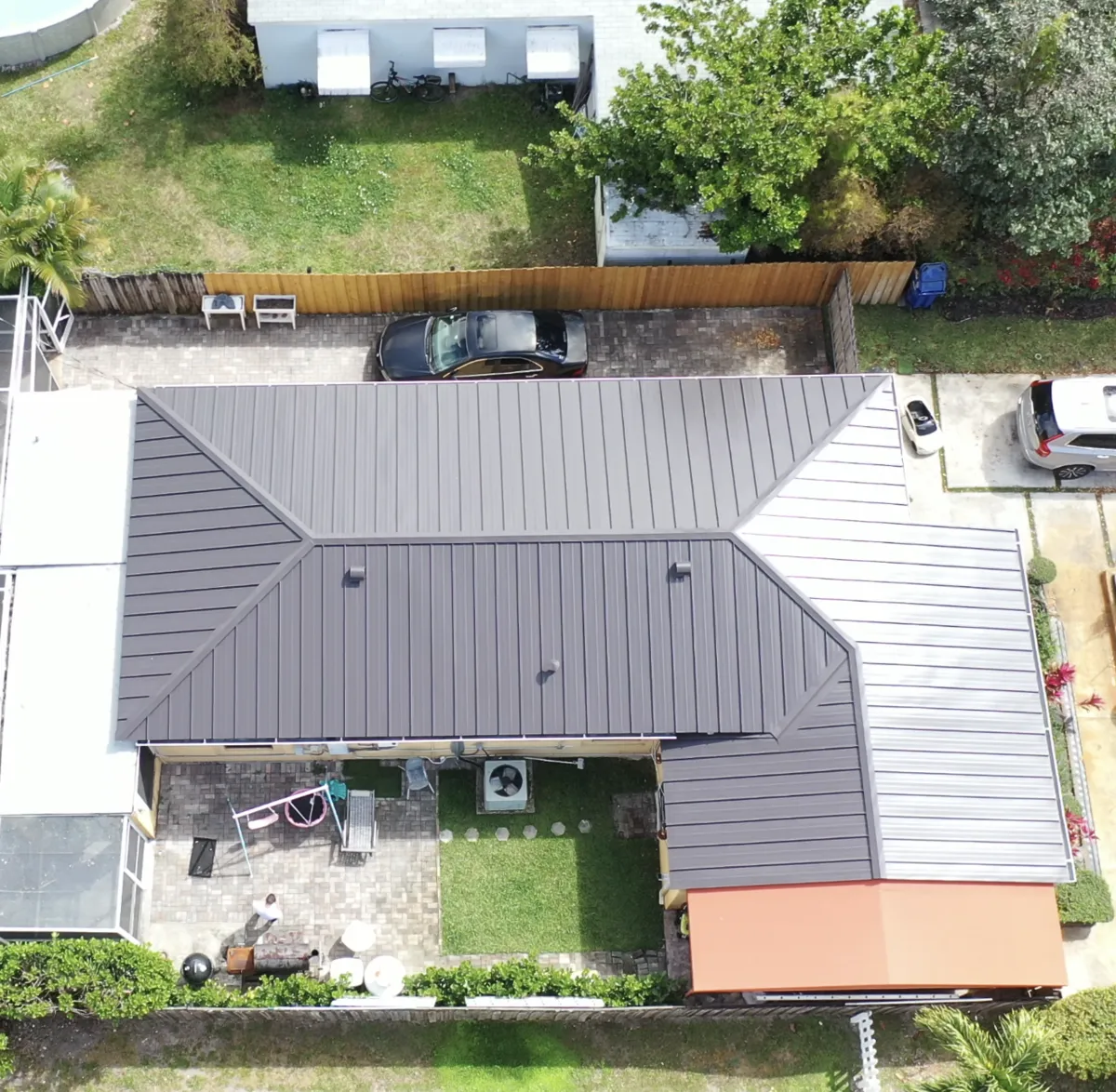
A hip roof — all sides slope down to the walls, no vertical gable ends — earns the credit. To qualify, non-hip features (gable ends, dormers) can't exceed 10% of the total roof perimeter. A flat roof or anything else is "other."
You can't change this without changing the house, so it's simply good to know where you stand. Most Mediterranean-style homes in Coral Gables and Boca Raton are hips; many ranch homes in Broward are gables.
Section 6 — Secondary water resistance
This is the credit most South Florida roofs miss, and it's the cheapest one to earn during a re-roof. Secondary water resistance (SWR) means that if the covering blows off, the deck itself is still sealed. It's satisfied by a self-adhering polymer-modified bitumen underlayment applied directly to the deck, or by foam adhesive at the deck seams.
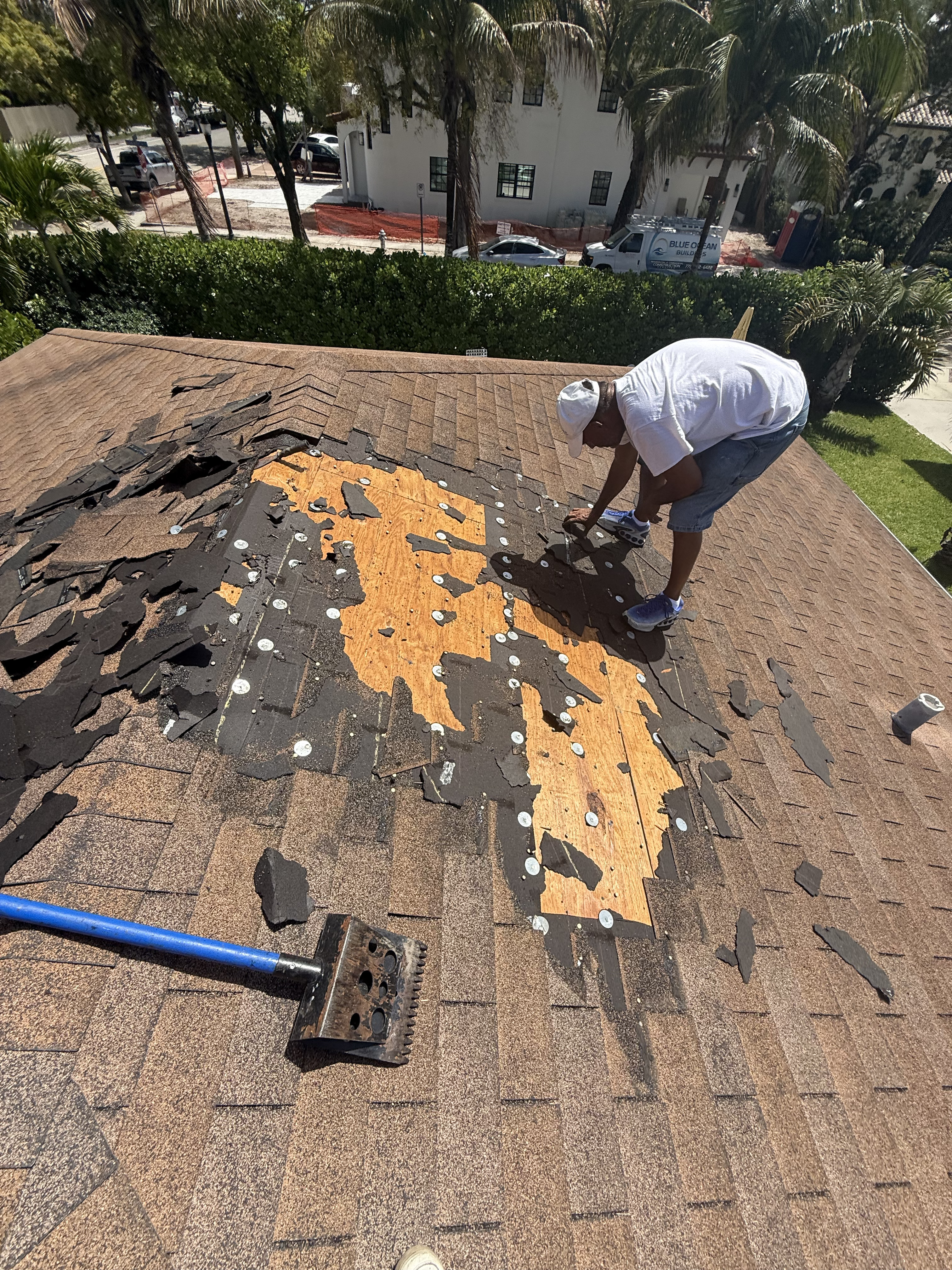
The catch: the inspector has to see it, and once the roof is finished you can't. Photos taken during the roofing job — underlayment down, before tile or shingles — are the proof. If your roofer didn't take them, the box gets marked "unknown," which pays nothing. Ask for the photos before final payment on any roof replacement.
Section 7 — Opening protection
Windows, doors, garage doors, and skylights. The top credit requires every glazed opening to be protected with impact-rated products or approved shutters. The most common miss is the garage door — a non-rated garage door drops the whole house to a lower tier. Impact windows and doors earn the credit permanently, with no panels to install before a storm.
How the credits add up
The form doesn't print a dollar figure; each insurer applies its own credit table. In practice, homeowners we work with see reductions in the wind portion of their premium ranging from a few hundred dollars a year on an older home with one or two features to well over a thousand on a hip-roof home with a new HVHZ roof, SWR, straps, and full opening protection. The credits stack.
Frequently asked questions
Do I need a new inspection after replacing my roof?
Yes. A re-roof changes at least three lines — roof covering, deck attachment, and often SWR — and the old form doesn't reflect them. Get the inspection as soon as the permit is finaled.
Can the inspection make my premium go up?
If the new form shows fewer features than the old one — for example, an old form claimed SWR that can't be verified — the insurer may remove that credit. An honest inspection is still the right move; a credit that can't be documented is a problem waiting for a claim.
Does the form matter for insurance claims?
Indirectly. It's a dated, photographed record of your roof's condition and attachments, which is useful if an insurer later argues damage was pre-existing. We cover that in our post on Florida roof claim deadlines.
My home is in Palm Beach County. Do the HVHZ dates apply?
No. Palm Beach isn't in the High-Velocity Hurricane Zone, so the statewide date (March 1, 2002) applies for Sections 1 and 2. Everything else on the form is the same.
Before you schedule one
Pull your roof permit history, find your attic access, and have any product approvals or roofing invoices ready. If you're planning a re-roof, schedule the inspection after it — and make sure the roofer photographs the deck nailing and underlayment while they're exposed. We build that into every wind mitigation inspection and roof project we do across Miami-Dade, Broward, and Palm Beach.
SIA Roofing · Florida Certified Roofing Contractor CCC1334814 · (305) 333-2893. Credit amounts are set by each insurer; this article explains the form, not your policy.
Ready to Protect Your Home?
Schedule a free inspection with South Florida's most trusted roofing experts.